Progressive Overload Explained: The One Concept That Actually Drives Gym Results
Quick Answer: Progressive overload means gradually increasing the demand on your muscles over time — through more weight, more reps, more sets, or better form — because muscles only adapt and grow stronger in response to a stimulus that’s slightly harder than what they’ve already adapted to.
You’ve been doing the same weights for the same reps for two months and wondering why nothing’s changing. Your body adapted to that exact stimulus weeks ago — it has no reason to keep changing without a new demand.

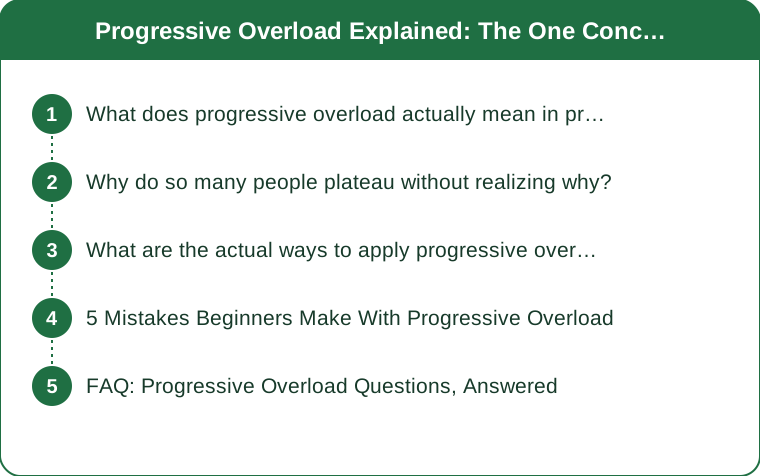
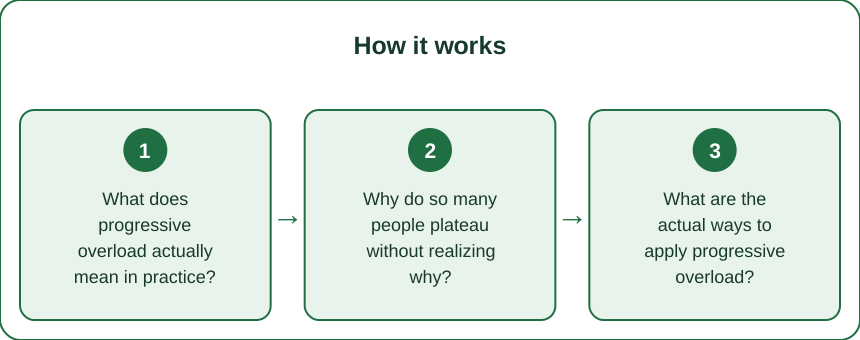
What does progressive overload actually mean in practice?
It’s the gradual, deliberate increase of demand on a muscle over time — most commonly through adding weight, adding reps, adding sets, or slowing down the tempo of a movement — so your body is consistently asked to do slightly more than it’s already comfortable with.
The key word is gradual: overload doesn’t mean maxing out every session, it means each week or two asks marginally more of your muscles than the last, giving them a reason to keep adapting.
Why do so many people plateau without realizing why?
The most common cause is repeating the exact same weights and reps indefinitely once a workout starts feeling comfortable — comfortable is exactly the sign that the stimulus has stopped being enough to drive further change.
Many beginners also don’t track their workouts, which makes progressive overload nearly impossible to apply intentionally — without a record of last session’s numbers, there’s no clear target to beat this session.

What are the actual ways to apply progressive overload?
Add weight once you can complete all planned reps with good form — even 2.5-5lbs matters over time. Add reps within a rep range before adding weight, if jumps feel too big. Add sets to increase total volume without changing weight or reps. Slow the tempo, especially the lowering phase, to increase time under tension without more weight.
You don’t need to apply all four at once — picking one dimension to progress each week keeps things manageable and trackable.
5 Mistakes Beginners Make With Progressive Overload
1. Increasing weight before reps and form are solid, which sacrifices technique for a number on the bar.
2. Trying to progress every single exercise every single session, which is unsustainable and often signals jumps too large to recover from.
3. Not tracking workouts at all, making it impossible to know what ‘more than last time’ even means.
4. Ignoring recovery, since muscles adapt during rest, not during the workout itself — overload without adequate recovery just compounds fatigue.
5. Comparing progress to someone else’s program, when the right rate of overload is highly individual.
FAQ: Progressive Overload Questions, Answered
How often should you actually increase weight or reps?
For most lifters, small increases every 1-2 weeks per exercise is sustainable — trying to add weight every single session usually isn’t recoverable long-term.
Can you apply progressive overload with bodyweight exercises?
Yes — adding reps, sets, slowing tempo, or progressing to a harder variation (like moving from knee to full push-ups) are all valid overload methods without external weight.
Is it normal to have weeks where you can’t progress at all?
Completely normal — sleep, stress, and nutrition all affect performance, and a maintenance week isn’t a failure of the process, just a natural part of it.
TL;DR:
- Muscles adapt to a stimulus, then stop changing without a new, slightly harder demand
- Progress weight, reps, sets, or tempo — one dimension at a time, gradually
- Track workouts; without a record, applying overload intentionally is nearly impossible
- Recovery matters as much as the overload itself — muscles adapt during rest
Pick one lift, one variable, and beat last session’s number by a small margin — that’s the entire mechanism behind gym progress.
See It in Motion
Seen here: Super High Waist Embossed Yoga Leggings with Inner Pocket — shop it on bubblelime.com
Keep Reading
This article is for general informational and styling purposes only. Fit, sizing, and product availability may vary.