Why Your Lifts Drop in a Hot Gym - and What to Change Instead of Panicking
Quick Answer: Strength genuinely drops in the heat - commonly 5 to 10 percent on working sets - because your body diverts blood to the skin for cooling, core temperature climbs, and heart rate runs 10 to 20 beats higher at the same effort. It is a performance change, not a loss of muscle or fitness, and it reverses within days of cooler conditions. Handle it by extending rest periods, cutting one set rather than dropping weight, training earlier, and judging sessions by effort rather than by the number on the bar.
Here is what is actually happening and how to keep progressing through it.

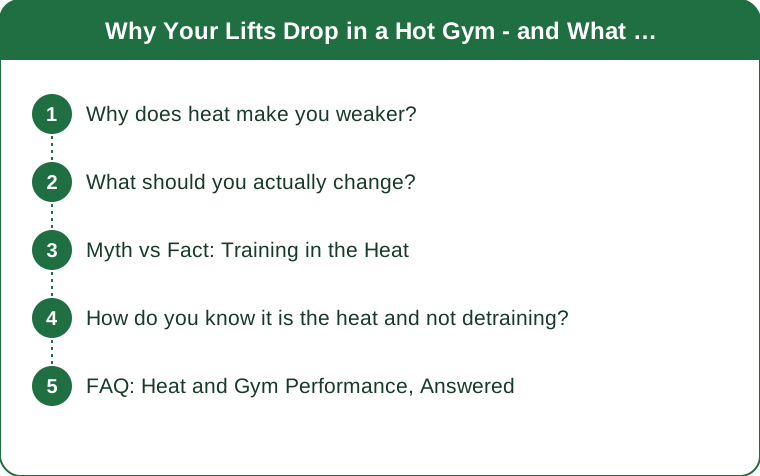
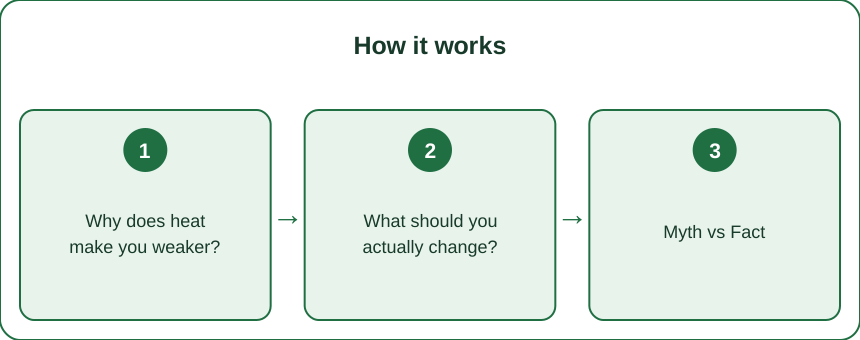
Why does heat make you weaker?
Your body prioritises cooling over performance. When core temperature rises, blood is redirected towards the skin to shed heat, which means less of it is available to the working muscle at any given moment.
Heart rate climbs for the same work. A set that put you at 140 beats per minute in spring can put you at 155 to 160 in a hot room - the cardiovascular system is doing the lifting and the cooling at once.
Recovery between sets slows down. The 90 seconds that felt sufficient in cooler weather is genuinely not enough when you start the next set already warm, which is why the drop-off usually shows up on set three rather than set one.
Grip goes first, and it goes early. Sweaty hands fail before the target muscle does on pulls, rows, and carries, so the set ends for a reason that has nothing to do with strength.
Dehydration compounds all of it. A fluid loss of only 2 percent of body weight measurably reduces strength and endurance, and that is easy to reach across a long session in a warm room.
And perceived effort rises independently. The same weight simply feels heavier when you are hot, which changes how many reps you are willing to grind out even when the muscle could manage more.
What should you actually change?
Extend rest periods before you touch the weight. Going from 90 seconds to 2 or 3 minutes solves most of the problem, because the issue is incomplete recovery rather than reduced capacity.
Cut a set rather than dropping the load. Three hard sets at your normal weight preserves the training stimulus far better than four sets at a reduced one - and it keeps your reference numbers intact.
Train at the coolest hour you can reach. Early morning is typically 5 to 8 degrees cooler than late afternoon in a gym that has been filling with bodies all day.
Start hydrating the day before, not in the car. Aim to arrive already hydrated, then take 150 to 250 ml every 15 to 20 minutes during the session rather than a single bottle at the end.
Add electrolytes for sessions over an hour in genuinely hot conditions. Plain water alone over a long, sweaty session dilutes sodium and can leave you feeling worse rather than better.
Use chalk or a grip aid. If grip is ending sets early, fixing grip restores the reps immediately and tells you whether the strength drop was ever real.
And put the hardest compound first. Squats and deadlifts should happen while you are still coolest, with accessories pushed to the back half of the session where the heat matters less.

Myth vs Fact: Training in the Heat
Myth: A strength drop in summer means you are losing muscle. Fact: Muscle does not disappear in a fortnight of warm weather. This is an acute performance effect, and the numbers return within days of cooler conditions.
Myth: You should just push through at the same weights and reps. Fact: Pushing through a genuine thermal limit increases injury risk and wrecks the following sessions. Adjusting volume is the mature answer.
Myth: Sweating more means a better workout. Fact: Sweat rate is a cooling response, not a measure of effort. The same session in a cooler room does identical work with less fluid loss.
Myth: Training in heat builds heat tolerance, so more is better. Fact: Heat acclimatisation is real and takes roughly 1 to 2 weeks, but it comes from consistent moderate exposure, not from grinding maximal sets while overheated.
Myth: If your heart rate is high, you are getting fitter faster. Fact: Elevated heart rate here reflects thermoregulation, not training intensity. It is a cost, not a benefit.
Myth: Cold water during training causes cramps. Fact: There is no good evidence for this. Cold fluid is absorbed well and helps lower core temperature - drink it.
How do you know it is the heat and not detraining?
Check whether the drop appeared suddenly. Heat effects show up within a session or two of conditions changing. Genuine detraining develops over weeks and follows a break in training.
Look at where in the session it happens. If set one is normal and sets three and four collapse, that is a recovery-and-temperature pattern. Detraining makes the first set feel wrong too.
Compare your heart rate at the same load. 10 to 20 beats higher than usual for identical work is a strong signal that thermoregulation is the variable.
Test on a genuinely cool day. If the numbers return immediately, you have your answer and no programme change is needed.
Rule out the boring causes first. Poor sleep, an eaten-late dinner, a stressful week, or the late luteal phase all reduce performance and all get blamed on the weather.
And keep training logs with conditions noted. A single line about room temperature and how you slept turns next summer into information rather than guesswork.
FAQ: Heat and Gym Performance, Answered
How much strength do you lose in the heat?
Commonly 5 to 10 percent on working sets, with the effect concentrated in later sets and in longer sessions. It is a temporary performance change, not a loss of muscle.
Should I lower the weight or do fewer sets?
Cut a set and keep the weight. Three hard sets at your normal load preserves the stimulus better than four sets at a reduced one, and it keeps your reference numbers usable.
How long does it take to adapt to training in heat?
Roughly 1 to 2 weeks of consistent exposure produces meaningful acclimatisation - better sweat response, lower heart rate at the same work, improved plasma volume.
How much should I drink during a hot session?
Arrive already hydrated, then 150 to 250 ml every 15 to 20 minutes. Add electrolytes for sessions over an hour in genuinely hot conditions.
Why does my grip fail before the muscle does?
Sweat reduces friction, so the bar slips before the target muscle fatigues. Chalk or a grip aid usually restores the missing reps outright.
Is a higher heart rate in the heat a sign of better cardio?
No. It reflects blood being diverted for cooling, not extra training intensity. Judge cardiovascular sessions by pace and effort rather than heart rate alone in hot weather.
When should I stop a session entirely?
Dizziness, nausea, chills, a headache, or stopping sweating are reasons to end the session, cool down, and rehydrate. Those are heat illness signals, not toughness tests - this is general information, not medical advice.
TL;DR:
- A 5 to 10 percent drop in a hot gym is normal - blood goes to the skin for cooling, and heart rate runs 10 to 20 beats higher for the same work.
- Extend rest to 2 to 3 minutes before you touch the weight. Incomplete recovery is usually the whole problem.
- Cut a set, do not drop the load. It preserves the stimulus and your reference numbers.
- Train at the coolest hour and put squats and deadlifts first.
- Hydrate the day before, then 150 to 250 ml every 15 to 20 minutes, with electrolytes past the hour mark.
- Fix grip with chalk before concluding you got weaker.
- Heat acclimatisation takes 1 to 2 weeks and comes from consistent moderate exposure, not from grinding while overheated.
Dizziness, nausea, chills, or stopping sweating mean stop and cool down. This is general information, not medical advice.
See It in Motion
Seen here: Racerback Tank Top - White — shop similar styles on bubblelime.com
Keep Reading
This article is for general informational and styling purposes only. Fit, sizing, and product availability may vary.